
- Newsroom
- Published on:
The AI Hype Gap: How to Close the Gap Between Expectations and Implementation
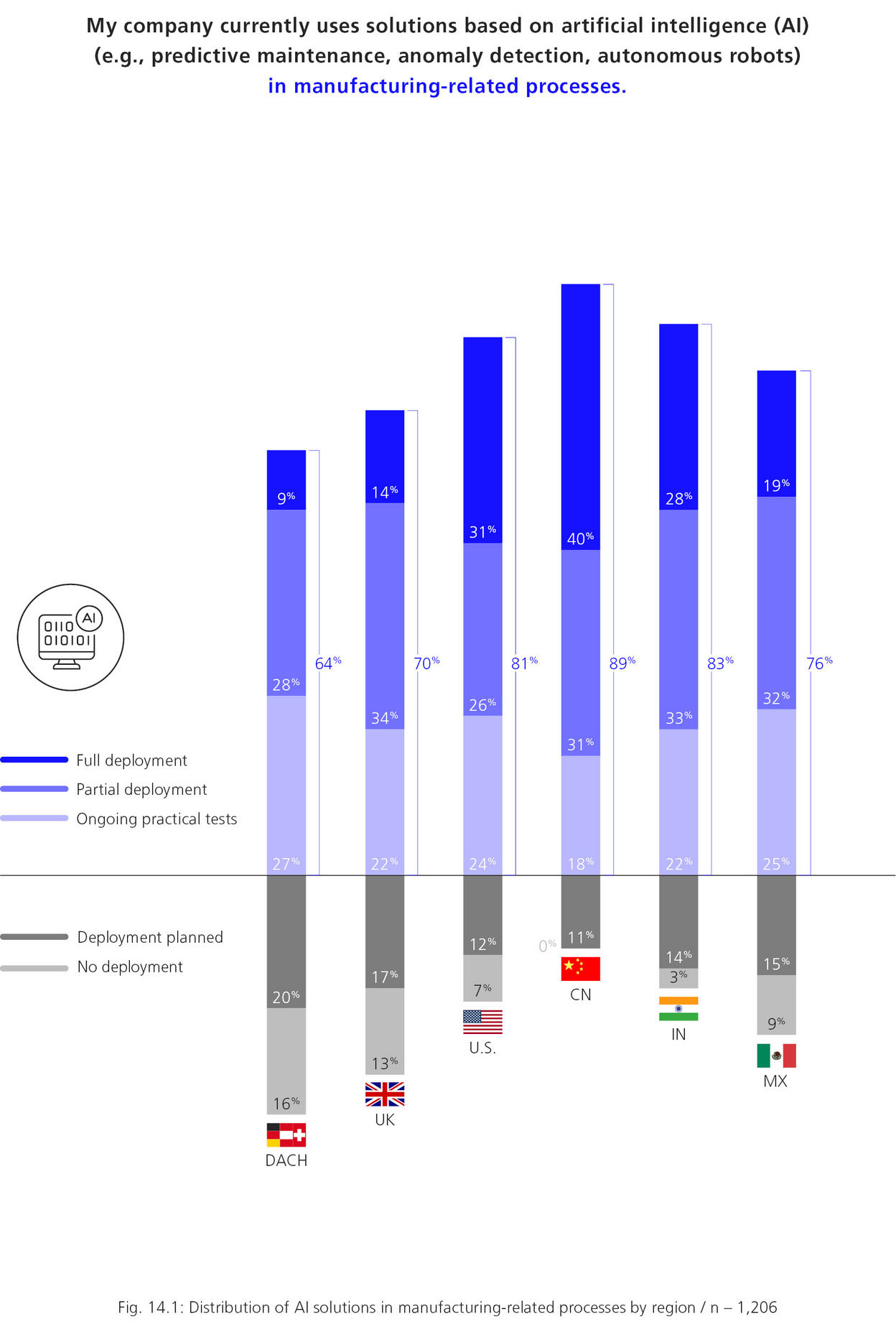
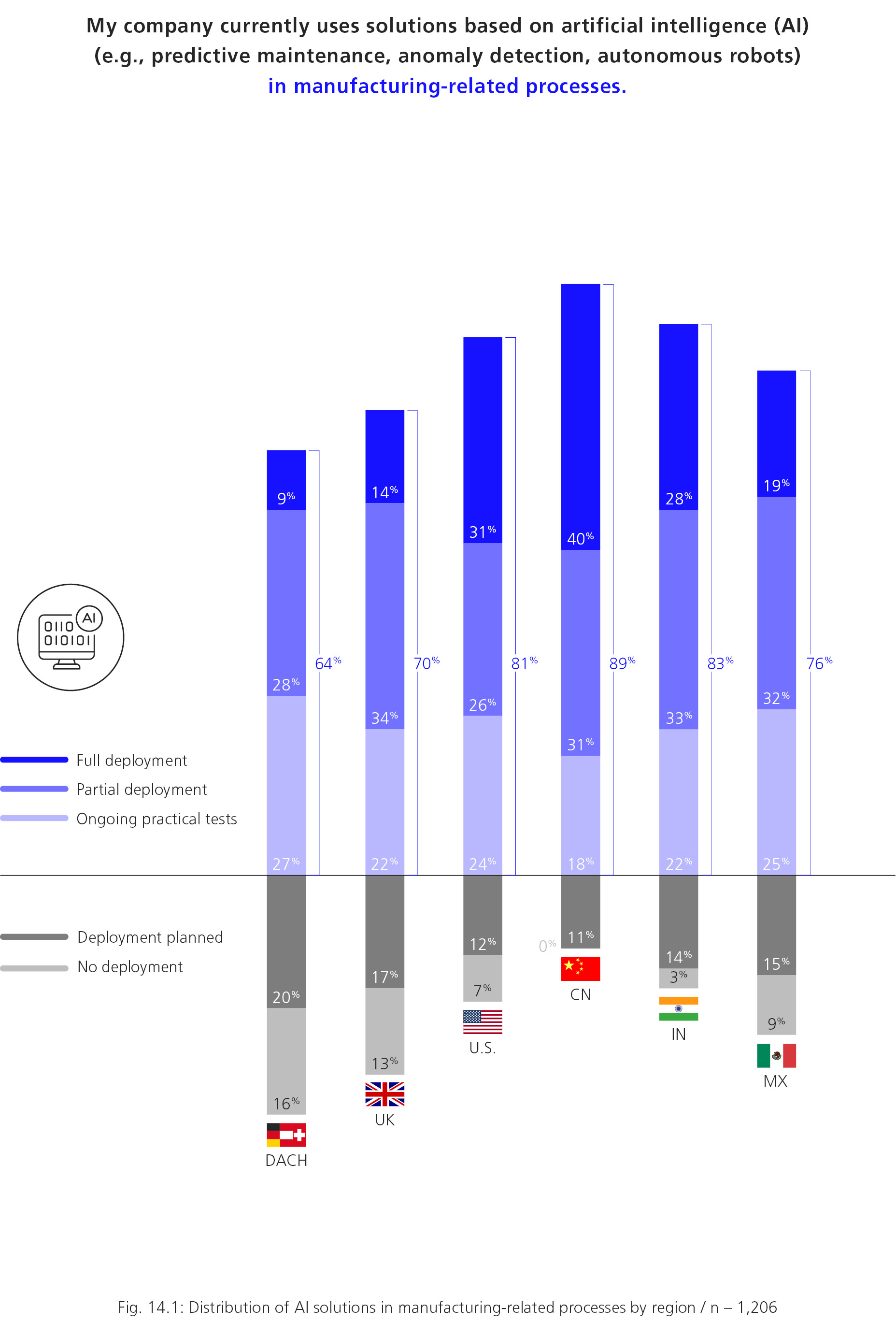
In manufacturing companies, we are seeing a growing number of solutions based on artificial intelligence, for example in predictive maintenance, anomaly detection, or the use of autonomous robots and vehicles.
However, international differences remain significant. When it comes to the partial or full use of AI in manufacturing-related processes, the DACH region ranks last with 37 percent. China leads with 71 percent (USA: 57 percent). These striking figures come from our latest Industry 4.0 Barometer.
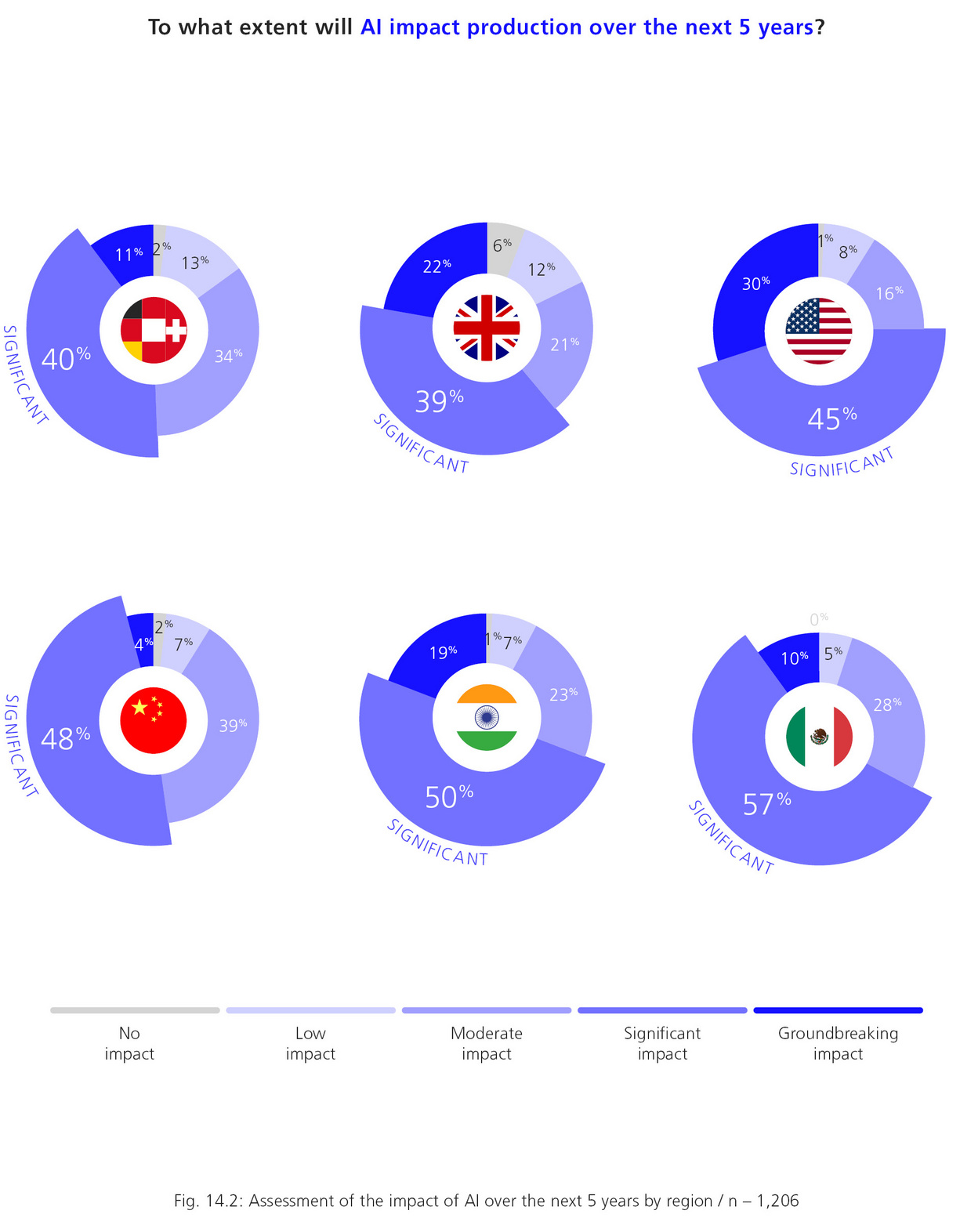
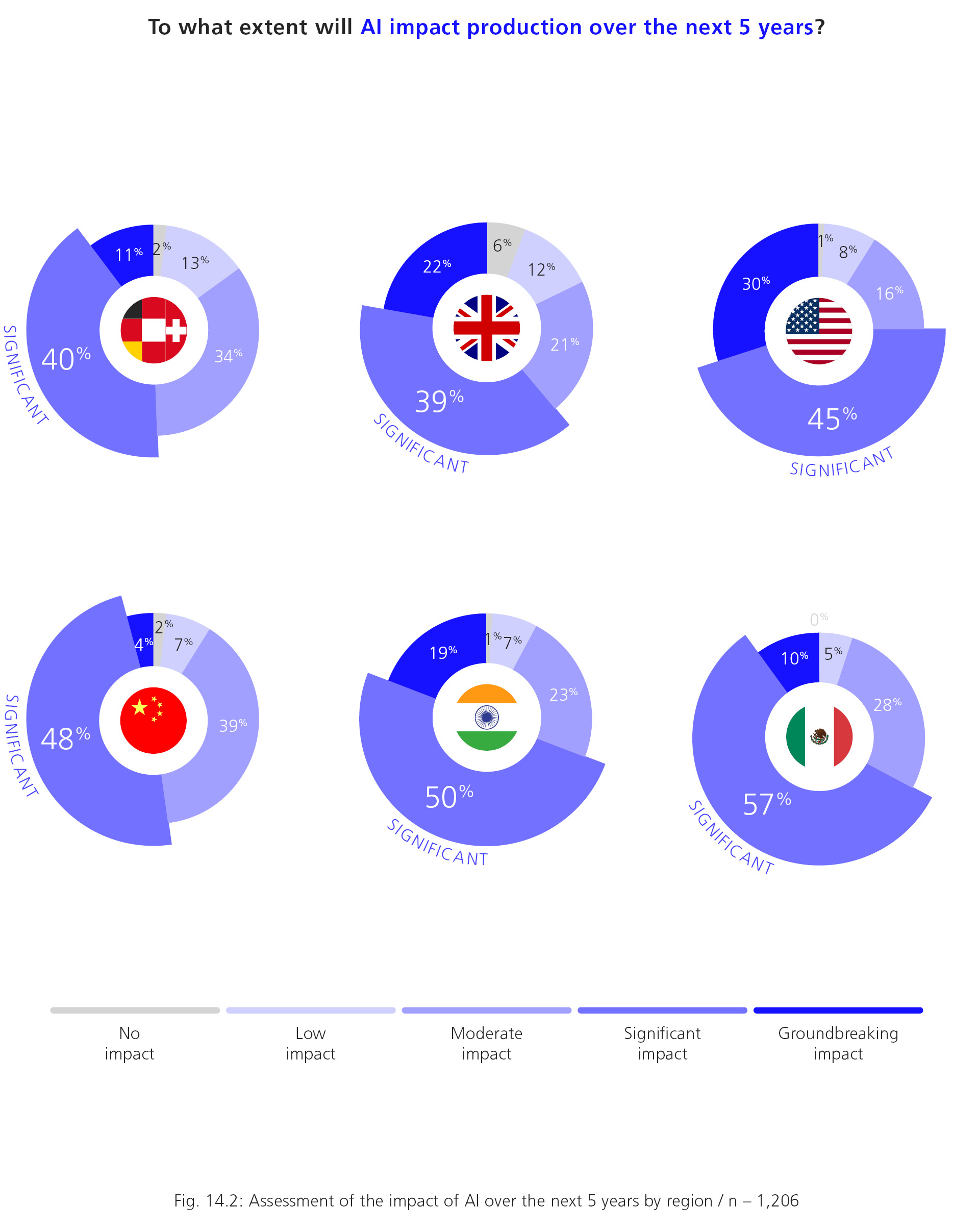
In contrast, there is broad consensus when it comes to expectations: 51 percent of DACH companies believe that AI will have “significant” or even “groundbreaking” effects on production over the next five years. China shows a similar level of agreement at 52 percent.
In other words, companies in the DACH region and China equally recognize the potential of artificial intelligence, but they respond to it differently. In German-speaking countries, the gap between high expectations and practical implementation is particularly pronounced (the “AI hype gap”). Why is this the case?
Apparently, companies in the DACH region lack the skills, investments, and organizational prerequisites needed to actually realize the expected potential of AI in industrial production. Our Industry 4.0 Barometer shows that many DACH companies are currently using AI only in pilot scenarios (27 percent), while deep integration into production processes is still at an early stage. In many organizations, implementation is delayed until concrete use cases and efficiency gains become visible in everyday industrial operations and through best practices.
With this mindset, the race for international competitiveness is being lost. Companies cannot simply “switch on” AI in their production environments once management gives the green light. First, they need to establish the necessary foundations over months – for example, by building data infrastructures, deploying sensors, and setting up digital twins – before smart algorithms can create real value in production.
Only with these foundations in place can AI become an effective productivity lever in industrial practice, rather than remaining an ambitious promise for the future. Let’s close the gap together – now.

Rebecca Vlassakidis
Spokesperson Digital Factory, Logistics & Customer Experience

Mirko Geyer
Spokesperson AI, Cyber Security, Aerospace & Defense
MHP Newsroom
Need information about MHP or our services and expertise? We are happy to help and will gladly provide you with current information, background reports, and images.