
- Newsroom
- Veröffentlicht am:
Europe’s Semiconductor Question: Why the Decisions Are Being Made Now – and What Europe Can Learn from China
In this “5 Questions, 5 Answers”, Dr. Jan Wehinger, Partner at MHP, and Maximilian Wenner, Senior Manager at MHP, explain why semiconductors are becoming a key industry for European sovereignty and what lessons can be drawn from China’s cross-industry semiconductor strategy.
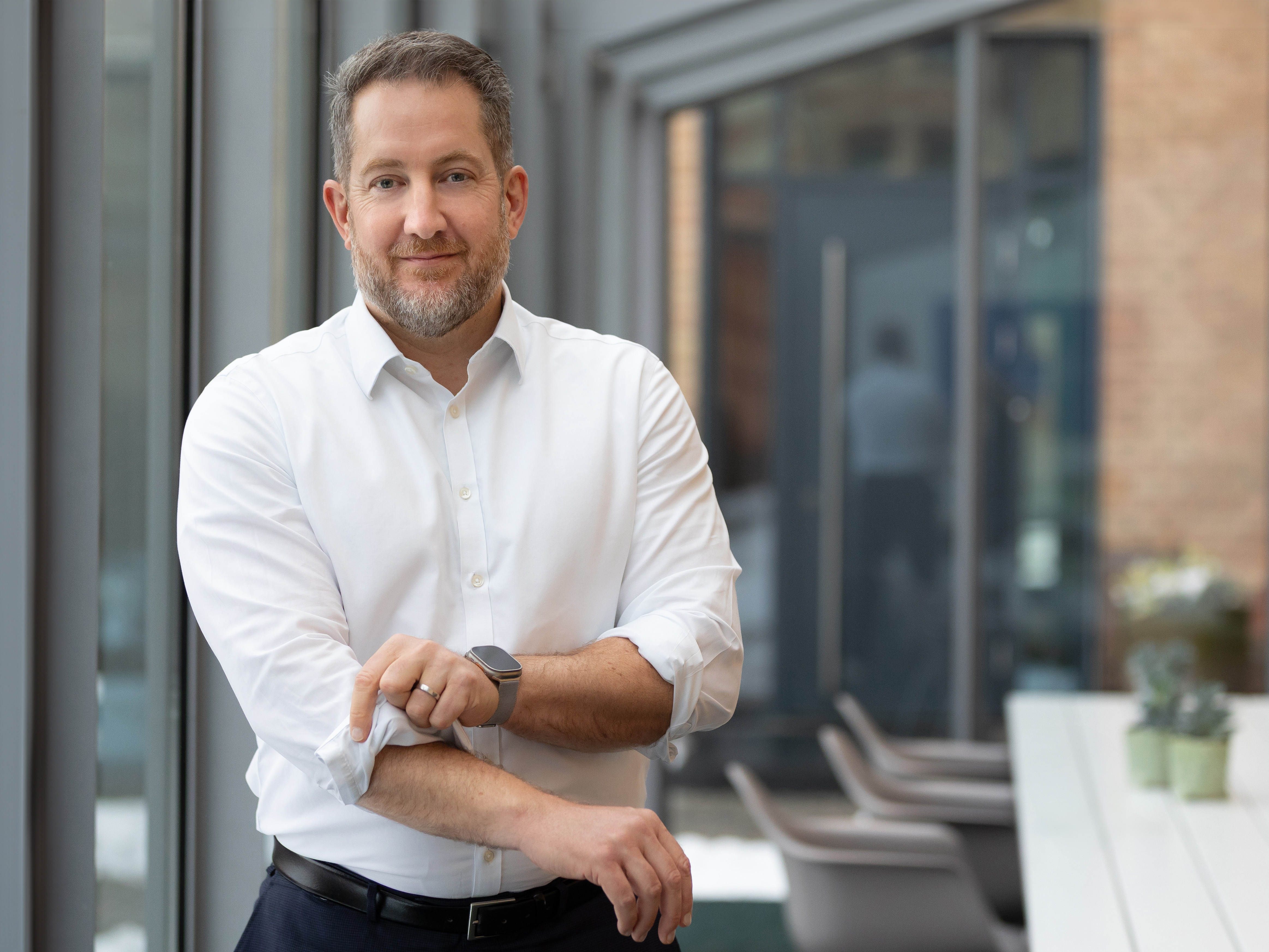
Dr. Jan Wehinger leads the intersection of industrial transformation, software-defined vehicles and semiconductor strategy. Maximilian Wenner drives the topics of semiconductor sovereignty, architecture strategy and industrial value creation depth across European industries. Together, they contributed to a Bitkom whitepaper on semiconductors in the automotive industry, currently being prepared within the Bitkom working groups Automotive and Semiconductor Ecosystem & Technology.
Against the backdrop of the European Commission’s draft proposal for the EU Chips Act 2.0, expected at the end of May 2026, they explain why the decisive course is being set now – and what Europe should learn from China’s semiconductor build-up.
Why are semiconductors becoming a strategic key industry for Europe now?
Maximilian Wenner: “Semiconductors are the foundational resource of industrial capability – comparable to steel and oil in the 20th century. They are embedded in vehicles, industrial robots, satellites, data centres, energy grids and medical devices. Whoever does not control this layer risks losing not just one industry, but many at the same time.
Three developments are creating pressure to act: the structural transformation driven by software-defined vehicles, industrial AI and connected defence; escalating geopolitical tensions between the United States and China; and declining trust in established supply chains. The Bitkom study Semiconductor Supply 2025 shows that only 37 per cent of German companies still consider the US a reliable supplier. Ninety-two per cent regard the situation in the Taiwan Strait as concerning, while 40 per cent expect a critical supply situation in 2026.”
Dr. Jan Wehinger:“Europe stands at the centre of this development. The comfortable strategic window has already closed. Those who fail to act now will no longer actively shape the next generation of vehicles, aircraft and industrial systems.”
What economic opportunities emerge if Europe rethinks semiconductor value creation?
Wenner: “Europe has far more substance than the public debate suggests. With ASML, we have the global de facto monopolist for EUV lithography, while Carl Zeiss SMT, TRUMPF, AIXTRON and SÜSS MicroTec are leading equipment and material suppliers. Infineon, NXP and STMicroelectronics dominate the automotive semiconductor market. What Europe lacks is not substance, but strategy and speed.
The opportunity lies in scaling these strengths across industries. Automotive is only one application area among many. Aerospace and defence require sovereign semiconductors for resilience and dual-use capabilities; industrial AI and robotics need them for the next generation of manufacturing; and the energy sector depends on them for smart grids and power electronics.
The strategically decisive semiconductor landscape consists of two complementary worlds: sub-three-nanometre nodes for HPC, generative AI and edge AI platforms, and robust 28-to-90-nanometre chips that carry industrial volume. Europe cannot afford to neglect either layer. China is pursuing precisely this integrated approach: Big Fund III is investing in HBM memory, AI hardware and compound semiconductors, while simultaneously investing heavily in mature nodes.”
What can Europe learn from China’s semiconductor strategy?
Wehinger: “China’s strategy is a textbook example of industrial policy consistency. Since 2014, China has mobilised around RMB 687 billion in capital through the state-backed ‘Big Fund’, most recently with Phase III in May 2024 (RMB 344 billion, approximately USD 47.5 billion). In January 2025, an additional dedicated AI industry fund worth RMB 60 billion was launched. Including provincial funds and state-owned banks, the overall investment volume reaches well into the hundreds of billions of US dollars.
What matters is not only the scale, but also the cross-industry approach. China is not building for a single industry, but along the logic of overall demand: telecommunications with Huawei, then mobile, then AI, now automotive with BYD, NIO and Xiaomi EV – alongside industrial and defence applications.”
Wenner: “External restrictions act as accelerators rather than constraints. US export controls introduced in October 2022 accelerated the rise of national champions such as SMIC, YMTC and CXMT. Despite the EUV ban, SMIC manufactured Huawei’s Kirin 9000s for the Mate 60 Pro using its 7nm process (N+2) in September 2023 – a turning point that surprised many Western analysts.
The implications for Europe are clear: long-term financing at a serious scale, a cross-industry strategy, and the willingness to use external pressure as a catalyst for acceleration.”
What sovereignty and security issues arise from today’s semiconductor dependencies?
Wehinger:“More than 60 per cent of global foundry revenue and around 92 per cent of the world’s most advanced semiconductors originate from Taiwan. TSMC alone controls roughly 70 per cent. Any escalation in the Taiwan Strait would simultaneously affect automotive, aerospace, defence, telecommunications, industrial production and energy infrastructure.
In addition, there are US export controls – from the BIS rule of 7 October 2022 to the STRIDE Act introduced in the US House of Representatives in November 2025. These measures draw European companies into compliance regimes that we do not shape ourselves.”
Wenner:“In OEM projects, we observe a structural dysfunction that we at MHP describe as the OEM Commitment Gap. OEMs demand capital-intensive mature-node capacities from foundries, yet are unwilling to commit to long-term purchase agreements.
There are structural reasons for this: electronic components are procured through multi-tier Tier-1 to Tier-3 supply structures. If OEMs were to dictate sub-sourcing channels, the entire procurement framework would come under pressure.
The result is a diffusion of responsibility: 56 per cent of Bitkom companies are stockpiling inventories, but only 21 per cent are developing their own chip design capabilities. This gap is our real sovereignty problem, because the design layer is where the strategic direction of the next industrial generation is determined.”
What should Europe do now – concretely?
Wehinger: “Europe must not copy the Chinese model, but it can adapt its principles. Four levers are decisive. First, a cross-industry approach instead of silo thinking – with a European semiconductor roadmap that jointly addresses automotive, aerospace, defence, industrial applications and AI infrastructure. Second, a genuine demand-side policy. Europe must use public procurement strategically – from the Bundeswehr and ESA to transport operators and utilities – to scale European semiconductors and semiconductor IP.”
Wenner: “Third, chip design capability as an independent pillar. Universities, research institutions and the education system must be systematically integrated into the industrial semiconductor cycle. Pitches, start-up innovations and prototypes require binding industrial testing and procurement commitments, combined with targeted public funding. Only then can European research become industrial scale.
And fourth: speed. The EU Chips Act 2.0, whose draft is expected at the end of May 2026, is important, but risks remaining too cautious. China has established within ten years what Europe is still debating in terms of governance structures today.
The question is no longer whether Europe can survive as an independent player, but how quickly it is willing to act. For German industry, this means breaking down silos internally while demanding strategic cohesion externally across Europe. This is precisely where we at MHP see our role – from automotive and aerospace & defence to manufacturing.”

Mirko Geyer
Sprecher KI, Cybersicherheit, Luft- und Raumfahrt & Verteidigung
MHP Newsroom
Sie benötigen Informationen zu MHP oder zu unseren Leistungen und Kompetenzen? Gerne unterstützen wir Sie mit aktuellen Informationen, Hintergrundberichten und Bildern.