
- Newsroom
- Veröffentlicht am:
Europe’s Next Frontier: Why the Moon Is Becoming Decisive
Giuseppe La Marca has been a Partner at MHP since September 1, 2025. As an aerospace engineer, he brings extensive experience in the aerospace sector and leads MHP’s Aerospace division, focusing on digitalization, industrialization, and sustainability in a rapidly evolving technological and geopolitical landscape.
Fascinated by the Moon since childhood, he now drives initiatives across Europe’s space industry, connecting research, industry, and digital services to create forward looking projects. In the context of the successful launch of Artemis 2, he explains why the Moon is becoming the next strategic frontier of human space exploration.
Why is the Moon becoming interesting for humanity now?
Giuseppe La Marca: “The Moon has always fascinated humanity and exerted a powerful attraction. At the same time, it is strategically well positioned: as Earth’s natural satellite in close proximity and as a launch point for deep space missions. The Moon is close enough to enable regular missions, yet far enough away to test technologies under real space conditions.
We are also seeing how the cislunar space, the region between Earth and the Moon, is changing at a rapid pace: governments are investing heavily in Earth observation, NASA is expanding the Artemis program, and private companies such as ispace or Astrobotic are developing commercial landers.
The race for access, infrastructure, and future utilization options has long since begun. Whoever opens up the Moon can set the rules, define standards, and shape the direction of the entire industry.”
What economic opportunities does the Moon offer?
La Marca: “The Moon will evolve into an independent economic area. Infrastructure, logistics, digital services, and production will form an integrated ecosystem. Habitat modules, energy supply, rovers, and transport systems will provide the physical foundation. On top of that, services such as communications, navigation, maintenance, and data analytics will emerge.
Particularly exciting is digital value creation: data centers on the Moon can relieve the increasingly congested Earth orbit and provide critical computing capacity for deep space missions as well as applications on Earth. Protected locations, for example in craters, increase resilience and give Europe the opportunity to operate data and IT infrastructure independently of Earth orbit.
Local resources also play a key role: water, oxygen, metals, regolith as construction material, and even helium 3 open up long term energy perspectives. Step by step, a self sustaining ecosystem is emerging that connects research, industry, and digital services.
Experts estimate the overall economic potential at several hundred billion euros, up to one trillion euros. However, these figures are still speculative, as many applications and technologies are only now being developed. What is already clear, though, is this: those who open up the Moon create new markets, from robotics laboratories and raw material processing to industrial manufacturing in space, reduce dependencies on transport, and lay the foundation for an independent extraterrestrial industry.”
How can Europe remain capable of acting in this environment?
La Marca: “From a technological perspective, Europe is already very strong. With the European Service Module, for example, we provide propulsion and life support systems for the Orion capsule, which will soon head toward the Moon and later land there. However, we must become faster, politically, technologically, and organizationally. We need clear priorities, reliable investments, and close coordination between the EU, ESA, industry, and start ups.
Launchers such as Ariane 6 are an important building block, but they are not sufficient on their own. What is crucial is also bundling programs, accelerating decision making processes, and bringing new technologies into missions more quickly. This is the only way Europe can remain independent, sovereign, and competitive.”
What security policy issues does the Moon raise?
La Marca: “The cislunar space is no longer a neutral area. As activity increases, so do dependencies, vulnerabilities, and risks. The EU is already responding with the EU Space Act.
Whoever controls the Moon controls traffic and data flows between Earth and the Moon. Europe must protect its communication and navigation systems, defend against cyberattacks, and avoid one sided dependencies.
The Moon itself can be part of the solution: stable locations secure infrastructure, provide robust communication and Earth observation capabilities, and improve situational awareness across the entire space domain.”
Why the Moon first and not Mars?
La Marca: “The Moon is only 384,000 kilometers away, and everything we need must be transported there. This makes it faster to reach, strategically relevant, and capable of opening up new opportunities in the short term. It serves as a testbed for technologies we will later need for Mars: energy supply, robotics, and the use of local resources. Those who open up the Moon therefore not only create a test environment, but also secure Europe’s leadership and ability to act in space.”

As an aerospace engineer, Giuseppe La Marca brings many years of experience in the aerospace sector and is responsible for the Aerospace division at MHP. (photo: MHP)
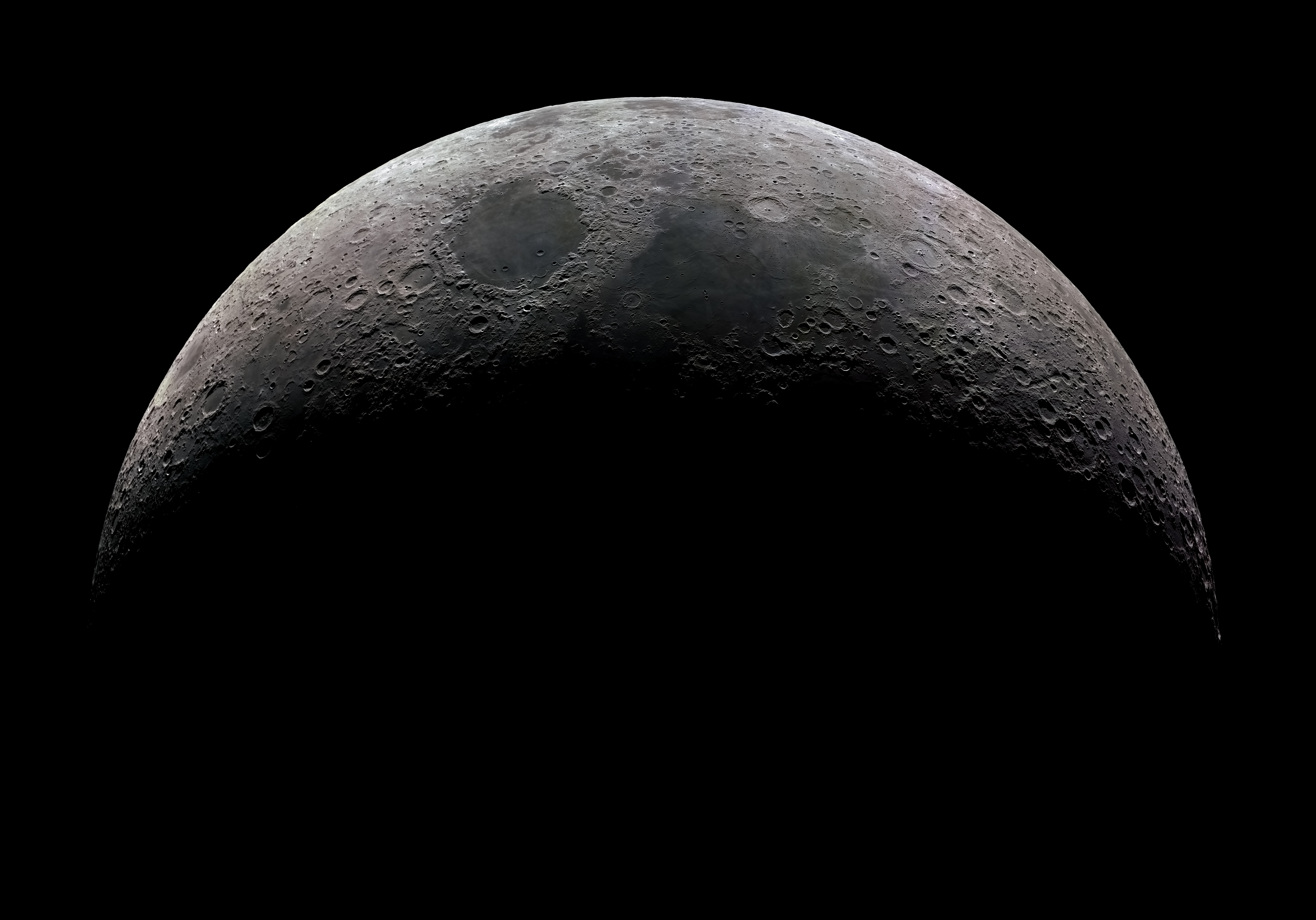
The Moon is therefore close enough to launch missions regularly, and far enough to test technologies under real spaceflight conditions. (photo: Adobe Stock)


Mirko Geyer
Sprecher KI, Cybersicherheit, Luft- und Raumfahrt & Verteidigung
MHP Newsroom
Sie benötigen Informationen zu MHP oder zu unseren Leistungen und Kompetenzen? Gerne unterstützen wir Sie mit aktuellen Informationen, Hintergrundberichten und Bildern.