
- Newsroom
- Veröffentlicht am:
Beyond Connectivity: What Defines the Intelligent Enterprise?
Private 5G, AI, edge computing, and industrial IoT are reshaping manufacturing. Yet technology alone does not deliver transformation. The real differentiator lies in how organisations connect data, systems, and operations to create intelligent, adaptive enterprises.
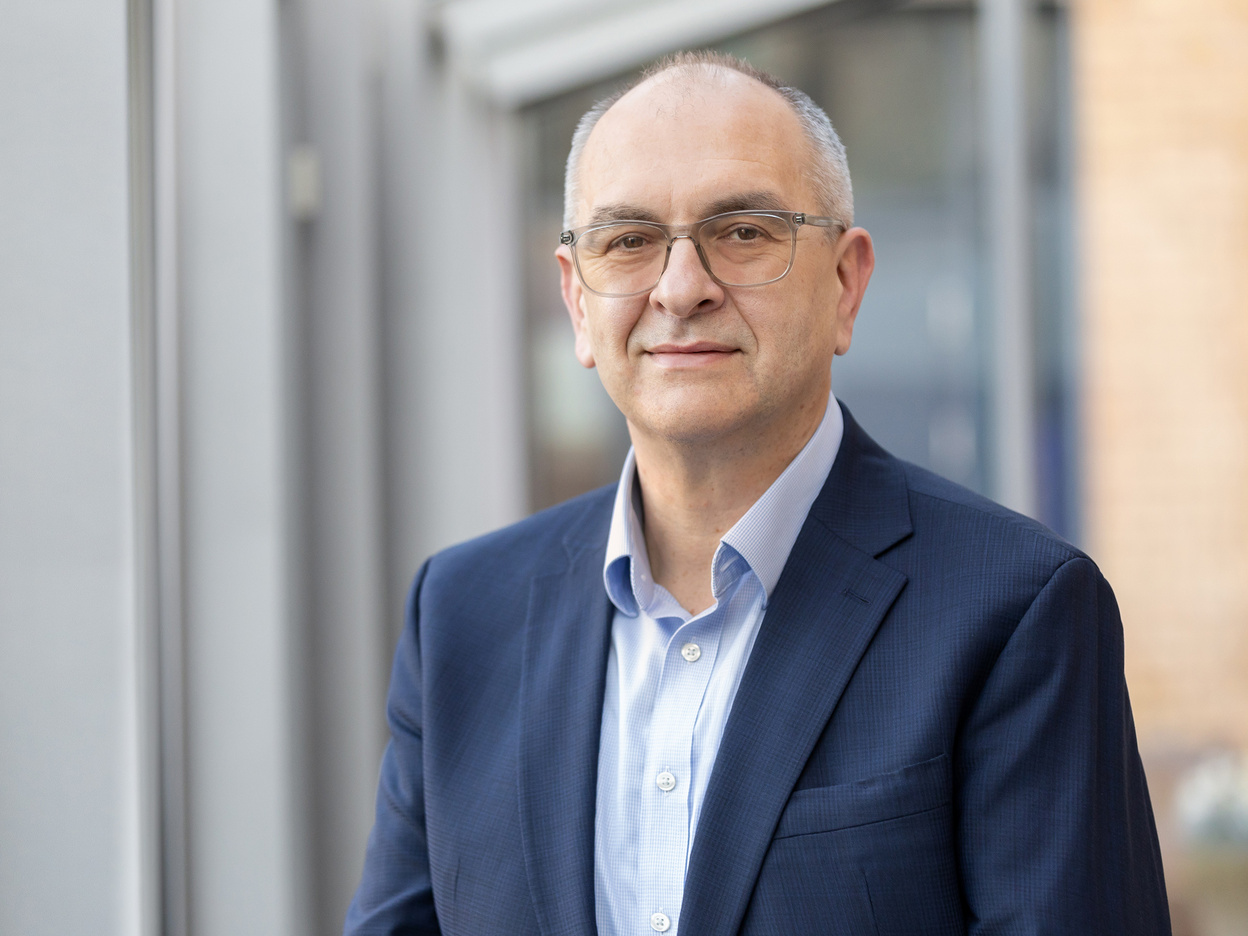
In this interview, Bernd Otto Hörmann, CEO of MHP India, shares why industrial transformation requires a business-first mindset, the growing importance of IT and OT integration, and how organisations can prepare for the next generation of digital manufacturing.
Hamsa Yogitashri: Bernd, thank you for this interview. Industrial transformation is often associated with technologies like Private 5G and AI. What do you believe organisations should focus on first?
Bernd Otto Hörmann: Technology is an important enabler, but it should never be the starting point. The most successful organisations begin by identifying the business outcomes they want to achieve, whether that is improving production efficiency, reducing downtime, increasing quality, or building more resilient supply chains.
Once these goals are defined, technologies such as Private 5G, AI, edge computing, and cloud become part of a broader transformation strategy instead of standalone investments. With the right architecture, they enable seamless information flow across operations and support faster, real-time decision-making.
For us at MHP, transformation is never about implementing the latest technology. It is about helping organisations build intelligent operating models that continuously create measurable business value.
Hamsa Yogitashri: Many companies have invested in digital technologies over the past decade. Why do some transformations still struggle to deliver long-term value?
Bernd Otto Hörmann: One of the biggest challenges is fragmentation. Organisations often implement excellent individual technologies, but those solutions stay disconnected from one another.
Manufacturing environments often combine legacy equipment with modern digital platforms, while IT and operational technology have traditionally evolved independently. Without integration, valuable data stays locked inside individual systems, limiting visibility and preventing organisations from fully using AI and advanced analytics.
Successful transformation depends on an integrated architecture that connects people, processes, data, and technology. With this foundation in place, organisations can scale innovation faster and with greater flexibility.
Hamsa Yogitashri: IT and OT integration has become a major industry discussion. Why is this convergence so important today?
Bernd Otto Hörmann: Historically, IT and OT served different purposes. IT focused on business systems, while OT managed production environments. Today, those worlds are becoming inseparable.
Modern factories generate enormous volumes of operational data that can improve planning, quality, maintenance, and decision-making across the business. To unlock that potential, organisations need secure and reliable integration between enterprise systems and the shop floor.
This convergence also enables new capabilities such as predictive maintenance, digital twins, autonomous production workflows, and AI-driven optimisation. More importantly, it creates a common foundation that allows organisations to respond faster to changing business conditions.
Hamsa Yogitashri: As industrial environments become increasingly connected, what does an intelligent enterprise look like?
Bernd Otto Hörmann: An intelligent enterprise goes beyond connecting machines. It creates an ecosystem where data continuously informs decisions and insights directly trigger action.
Imagine production systems that automatically adapt to changing demand, maintenance schedules generated before equipment failures occur, supply chain disruptions identified early, and quality issues detected in real time. These capabilities become possible when connectivity, AI, cloud, and edge technologies operate together within a unified digital ecosystem.
Intelligence is measured by the amount of technology deployed, along with an organisation's ability to make better decisions faster and at scale.
Hamsa Yogitashri: What advice would you give business leaders beginning or accelerating their industrial transformation journey?
Bernd Otto Hörmann: Focus on business priorities before technology choices.
Start with high-impact use cases that deliver measurable outcomes, establish common data standards, and build an architecture that can evolve rather than solving isolated problems.
Transformation should also be viewed as a continuous capability rather than a one-time programme. The organisations that will lead tomorrow are those investing today in scalable platforms, strong IT and OT collaboration, and a culture that embraces continuous innovation.
Industrial transformation is no longer simply about becoming more connected. It is about becoming more intelligent, more resilient, and more competitive.

Ann Holz
Sprecherin International & Corporate, SAP Enterprise
Weitere News

MHP Newsroom
Sie benötigen Informationen zu MHP oder zu unseren Leistungen und Kompetenzen? Gerne unterstützen wir Sie mit aktuellen Informationen, Hintergrundberichten und Bildern.